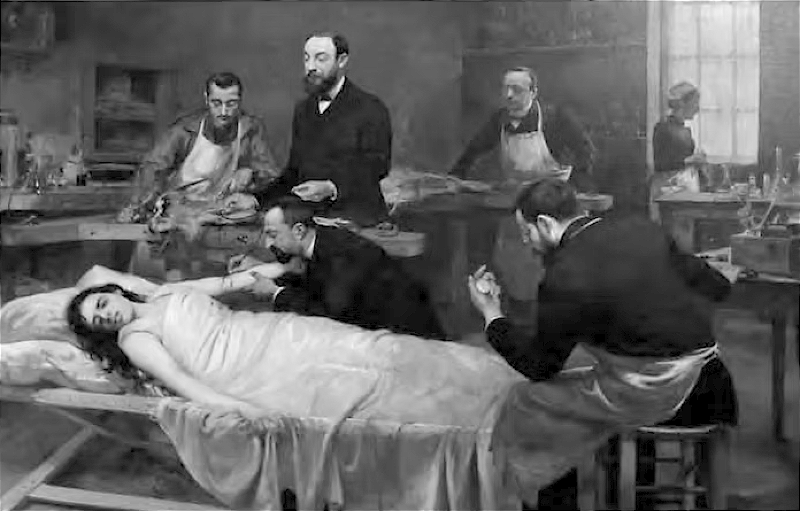
He created a fake epidemic that helped save a Polish town

It began with a rumour. Years after the war ended, stories started circulating about a Polish doctor who had supposedly saved thousands of Jews from the gas chambers by inventing a false epidemic. Newspapers repeated it. A documentary crew went looking for it. A myth formed around the idea that one man and one clever medical trick had preserved a large Jewish population from certain death. The truth is more nuanced, grounded in the very specific nature of life in occupied Poland, in the habits of the German authorities, and in the slow and sometimes uncomfortable way historical memory evolves. Eugene Lazowski did save people. Many of them. But not in the precise way the legend later claimed. What he did manage was extraordinary in its own right. It simply deserves to be told as it really happened. He learned that patients injected with a harmless strain of Proteus bacteria would test positive for typhus. (via Utterly Interesting)

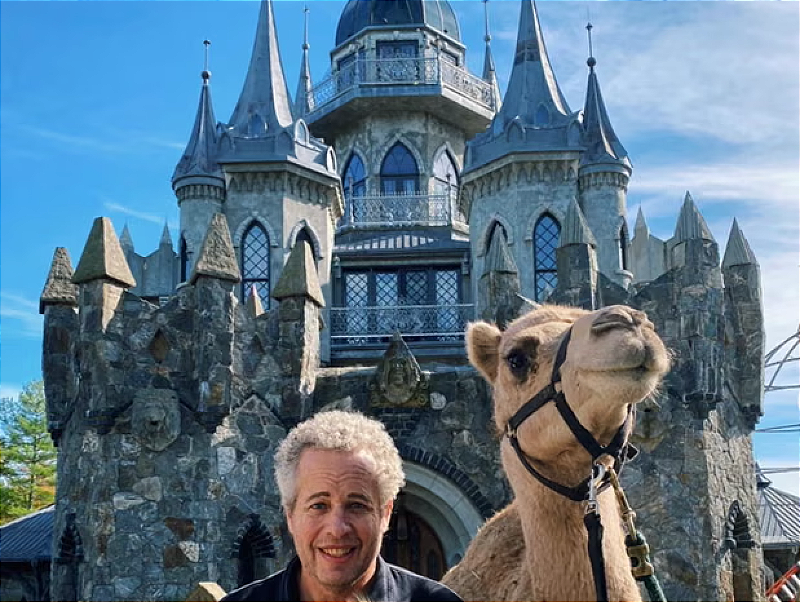
He built an exoskeleton and an artificial stomach so he could blend in with a herd of goats

Building an exoskeleton of a goat and a prosthetic stomach to digest grass before attempting to cross the Alps on all fours must rank as one of the weirder research projects funded by the Wellcome Trust. But London designer Thomas Thwaites has turned his bizarre mission to bridge the boundary between Homo sapiens and other species by becoming “GoatMan” into an enlightening and funny book. Informed by advice from a Danish shaman, neuroscientists, prosthetists, animal behaviourists and Swiss goat herders, it explores what connects and separates us from other animals. Thwaites found the physical challenges of becoming a creature that moved on all fours almost insurmountable. Primates are “weird”, Thwaites says, for putting almost all their weight on their back legs; he required prosthetics to put 60% of his weight on his “front legs”. His pelvis was also 135 degrees out of alignment. “I was sort of shocked at how bad a goat I was,” he says, “and I was really trying.” (via The Guardian)

Note: This is a version of my When The Going Gets Weird newsletter, which I send out via Ghost, the open-source publishing platform. You can see other issues and sign up here.

Continue reading “He created a fake epidemic that helped save a Polish town”

The social web is dying. Is that a good thing?

If you spend much time wandering around what we used to call the social web — and by that I mean primarily the large social apps and platforms like Facebook and Instagram and X and Snapchat and even TikTok — you might find yourself sympathizing with the great Yogi Berra, who once said of a certain place that “No one goes there any more, it’s too crowded.” It would be hard to argue that social networks are empty, and yet it often seems as though no one is there any more, or at least no one we recognize and/or want to spend time around. There are lots of posts, and videos, and photos — so many posts — and yet there is a feeling that (to use another famous quote, this one from Gertrude Stein) there’s no there there. Is it just because suspect some of those people are actually AI bots simulating human activity? Possibly. But I think there’s something deeper going on as well.

What we do know with some level of certainty is that the decline of social networking broadly speaking is a real, observable phenomenon as well as a hunch. The Financial Times recently reported that a study it commissioned shows that social media use peaked in 2022 and has since gone into more or less steady decline. The study was an analysis of the online habits of 250,000 adults in more than 50 countries that was carried out by a digital-audience insights company called GWI. The study’s authors took pains to point out that this was not just an unwinding of a screen-time or social-media bump that took place during COVID lockdowns — usage has reportedly “traced a smooth curve up and down over the past decade plus.”

Across the developed world, adults aged 16 and older spent an average of two hours and 20 minutes per day on social platforms at the end of 2024, down by almost 10 per cent since 2022. Notably, the decline is most pronounced among the erstwhile heaviest users — teens and 20-somethings. Additional data from GWI trace the shift. The shares of people who report using social platforms to stay in touch with their friends, express themselves or meet new people have fallen by more than a quarter since 2014. Meanwhile, reflexively opening the apps to fill up spare time has risen, reflecting a broader pernicious shift from mindful to mindless browsing.

Note: This is a version of my Torment Nexus newsletter, which I send out via Ghost, the open-source publishing platform. You can see other issues and sign up here.

Continue reading “The social web is dying. Is that a good thing?”

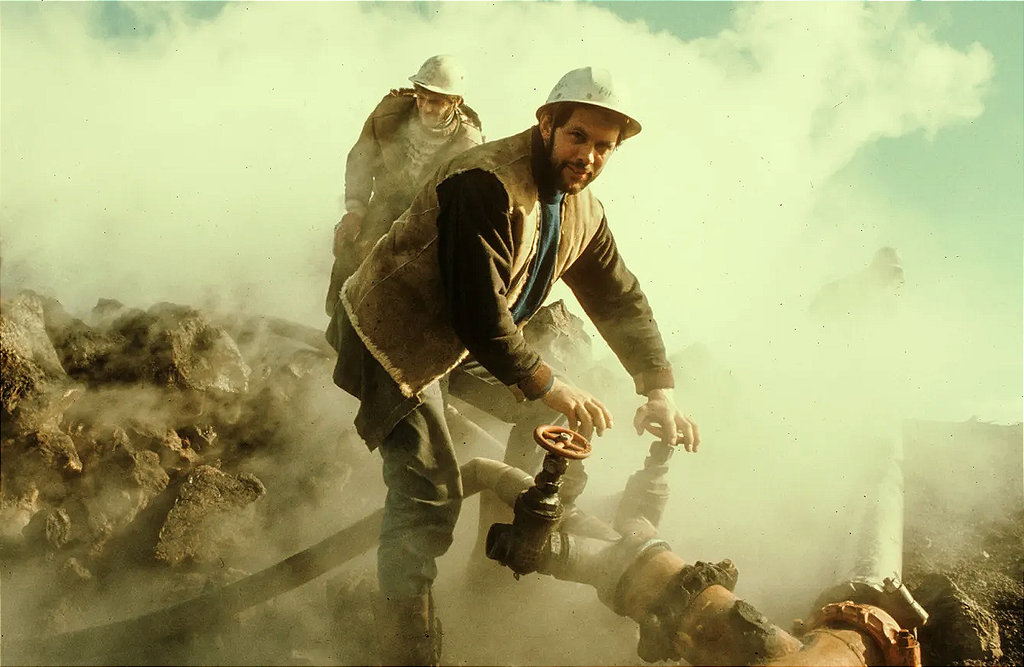
A ragtag group of artists have taken over Bombay Beach

It is easy to miss California’s biggest environmental disaster. Driving north on Highway 111, you wouldn’t expect to find an inland sea. If it’s summer, the thermometer in your car could read 115 degrees. But amid the shimmering heat, there are signs of water. All around you, rows of broccoli, lettuce, and alfalfa stretch in every direction. In the fields, farmworkers bend and straighten. The air is sharp with cow dung. A pall of dust hangs over everything. You are sixty miles north of the Mexican border. You’re driving out of poverty and into money, away from one of the poorest counties in California and toward towns named for oases. Palm Springs. Rancho Mirage. The left turn is easy to miss, the brown sign a seeming anachronism: “Bombay Beach.” Surely there is no town here, you think, let alone a beach. But if you continue, you’ll see hints of life. In the distance, a squat building hangs on under the punishing sun. (via The Believer)

Three-year-old chess prodigy becomes youngest player to earn official rating

India’s Sarwagya Singh Kushwaha has become the youngest player in chess history to earn an official Fide rating at the age of three years, seven months and 20 days. The chess prodigy edged out the previous record of compatriot Anish Sarkar, who was three years, eight months and 19 days when he reached the milestone in November last year. Kushwaha, who is enrolled in nursery school in the Indian state of Madhya Pradesh, holds a rapid rating of 1,572. To achieve a rating from Fide, the International Chess Federation, a player needs to beat at least one Fide-rated player. A rating is a score that measures a chess player’s strengths based on their performances and is not the same as a ranking. World No 1 Magnus Carlsenis the top in rapid chess with a rating of 2,824. Kushwaha defeated three rated players in events across his state and other parts of the country to secure his record-breaking status. (via The Guardian)

Note: This is a version of my When The Going Gets Weird newsletter, which I send out via Ghost, the open-source publishing platform. You can see other issues and sign up here.

Continue reading “A ragtag group of artists have taken over Bombay Beach”

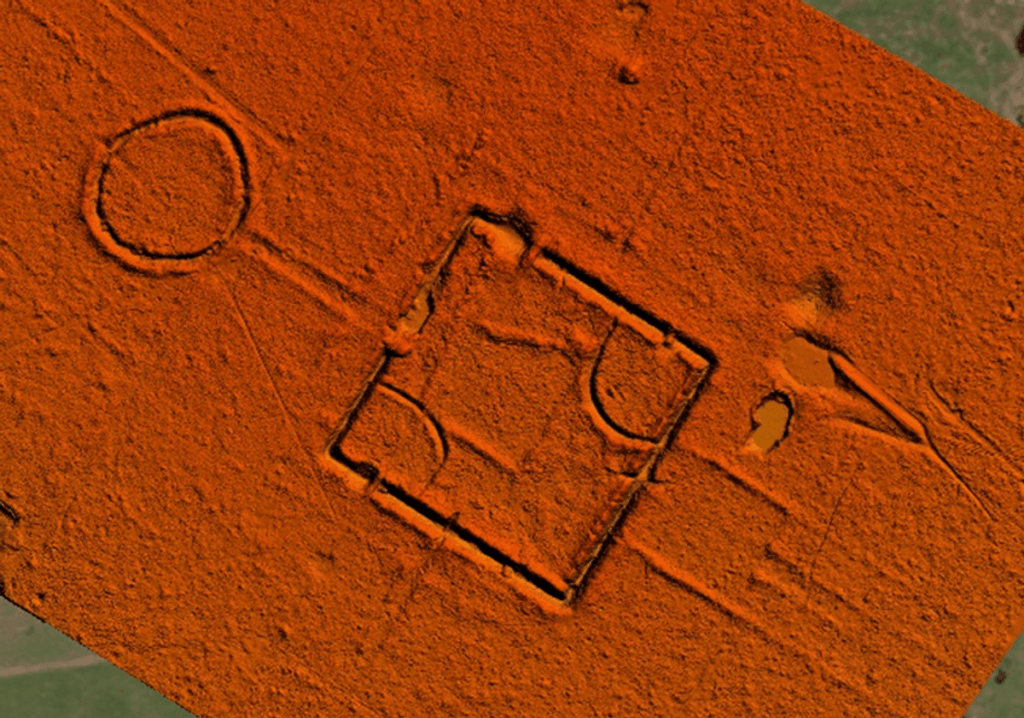
A volcanic eruption may have led to the spread of the Black Death

The infamous Black Death — a pandemic that killed as many as one third to one half of Europeans within just a few years — may have been aided in its devastation by an unknown volcanic eruption. That’s the hypothesis presented in research published December 4 in Communications Earth & Environment, which argues that the eruption triggered several seasons of climate instability and crop failures. That instability, in turn, forced several Italian states to import grain stores from new sources—specifically, from regions surrounding the Black Sea. Riding along on those grain stores, the researchers posit, were fleas infected with Yersinia pestis, the bacterium that causes the plague. (via Scientific American)

Research shows cold pizza might be better for you than hot pizza

Your first thought on hearing this is probably “Why? Why is leftover pizza healthier for me?” And the answer has to do with what happens when you cool the delicious crust. When you cool a pizza to below 40 degrees Fahrenheit, some of the starches in the dough will start to mingle together to form these long chains called resistant starches. They resist digestion, and another word for a carbohydrate that resists digestion is fiber! And even if you reheat the pizza, the chains stay intact, so your body doesn’t break them down to sugar. They mostly pass through. This could help reduce blood sugar spikes for people with diabetes or people who just need more fiber for a healthier gut. And this seems to work for a lot of starches, like rice, pasta, potatoes—even beans and lentils. Heating then cooling the starch changes its properties. It’s like tempering chocolate or forging a stronger steel. (via Scientific American)

Note: This is a version of my When The Going Gets Weird newsletter, which I send out via Ghost, the open-source publishing platform. You can see other issues and sign up here.

Continue reading “A volcanic eruption may have led to the spread of the Black Death”

How playing Santa Claus at Macy’s changed his life

Santa Claus was nursing a beer at an uptown dive bar. The neighborhood was gentrifying, and management seemed eager to accommodate—there was scented soap in the bathroom and twenty-two-dollar lobster rolls. But the place couldn’t outrun the regulars. They drank tumblers of Irish whiskey filled to the brim, illicit pours they secured with ten-dollar tips to a curvy Dominican bartender. Santa — Billy — was fiftyish, with a modest gut, gray hair, a lustrous beard, and a caddish gaze that followed the bartender up and down the rail. He was dressed in sweatpants and a T-shirt. For the price of three beers, he told me his story. As a young man, Billy had come to New York to be an actor. These were bad years, shameful even. He lost his job. He lost his wife. Lost touch with his young son too. He was overweight and undershaved. A friend had a weird idea: Billy could try playing Santa Claus at Macy’s. And that’s what Billy did. (via Esquire)

It’s illegal to sell chewing gum in Singapore and has been since 1992

The sale of chewing gum in Singapore has been illegal since 1992. Some motivations for the ban included stopping the placement of used chewing gum in inappropriate and costly places, such as the sensors of subway doors, inside lock cylinders, and on elevator buttons. Chewing gum was causing maintenance problems in high-rise public-housing apartments, with vandals disposing of spent gum in mailboxes, inside keyholes, and on lift buttons. Gum stuck on the seats of public buses was also considered a problem. Since 2004, an exception has existed for therapeutic, dental, and nicotine chewing gum, which can be bought from a doctor or registered pharmacist. It is not illegal to chew gum in Singapore, but it is against the law to import it and sell it, apart from the aforementioned exceptions. According to a BBC News article, it is legal for a traveler to bring in a small amount of chewing gum for personal use, and there is a fine for spitting the gum out in an inappropriate place.   (via Wikipedia)

Note: This is a version of my When The Going Gets Weird newsletter, which I send out via Ghost, the open-source publishing platform. You can see other issues and sign up here.

Continue reading “How playing Santa Claus at Macy’s changed his life”

That time Abraham Lincoln had a terrible blind date

In 1838, 29-year-old Illinois state representative Abraham Lincoln went on a pseudo blind date set up by a friend. The date wasn’t entirely blind — Lincoln had seen the sister some years before, and said she seemed to be “intelligent and agreeable.” But things quickly went from great to uncomfortable when Mary Owens did not look as Abe had remembered her. “I knew she was oversize, but she now appeared a fair match for Falstaff,” he wrote. “When I beheld her, I could not for my life avoid thinking of my mother; and this, not from withered features — for her skin was too full of fat to permit of its contracting into wrinkles — but from her want of teeth, weather-beaten appearance in general.” Despite this initial impression, Lincoln seems to have changed his mind later, because he proposed marriage — and Owens refused. Twice. (via Mental Floss)

If you have an allergy to pork scientists say you are probably also allergic to cats

A pork allergy is an adverse immune response after consuming pork and its byproducts. It is also called pork-cat syndrome because most pork allergies are related to cat allergies. The reason that some cat-sensitized individuals are susceptible to pork allergies is that some individuals are not only allergic to the cat dander, but are also allergic to a protein found in cats called albumin.  Albumin is also found in meat from pigs and other animals. Other causes of pork allergy are unknown. Undercooked pork or dried pork products tend to cause more reactions than well-cooked pork. Symptoms include urticaria (hives), pork allergy rash, and inflammation of the skin; gastrointestinal symptoms including nausea, vomiting, and stomach cramps; runny or stuffy nose; mild fever; wheezing and difficulty breathing; and in rare cases, anaphylaxis. (via NY Allergy)

Note: This is a version of my When The Going Gets Weird newsletter, which I send out via Ghost, the open-source publishing platform. You can see other issues and sign up here.

Continue reading “That time Abraham Lincoln had a terrible blind date”

A startup says it has a process for turning mercury into gold

A fusion energy start-up claims to have solved the millennia-old challenge of how to turn other metals into gold. Chrysopoeia, commonly known as alchemy, has been pursued by civilisations as far back as ancient Egypt. Now San Francisco-based Marathon Fusion, a start-up focused on using nuclear fusion to generate power, has said the same process could be used to produce gold from mercury. In an academic paper published last week, Marathon proposes that neutrons released in fusion reactions could be used to produce gold through a process known as nuclear transmutation. The paper has not yet been peer-reviewed but has had a positive reception from some experts in the field. “On paper it looks great and everyone so far that I talk to remains intrigued and excited,” Dr Ahmed Diallo, a plasma physicist at the US Department of Energy’s national laboratory at Princeton who has read the study, told the Financial Times. (via FT)

A raccon broke into a liquor store and was found passed out face down in the bathroom

A drunken raccoon was found asleep amid its work at the ABC liquor store in Ashland, Virginia, a trail of broken bottles and spilled booze leading to its resting place by the staff toilet. “Officer Martin safely secured our masked bandit and transported him back to the shelter to sober up before questioning,” Hanover County Animal Protection and Shelter posted to social media. “After a few hours of sleep and zero signs of injury (other than maybe a hangover and poor life choices), he was safely released back to the wild, hopefully having learned that breaking and entering is not the answer. … Just another day in the life at Hanover Animal Protection!” The Associated Press talked to the animal control officer who responded to the call and found the plastered procyonid. “I personally like raccoons,” she told them, “He fell through one of the ceiling tiles and went on a full-blown rampage, drinking everything.” (via Boing Boing)

Note: This is a version of my When The Going Gets Weird newsletter, which I send out via Ghost, the open-source publishing platform. You can see other issues and sign up here.

Continue reading “A startup says it has a process for turning mercury into gold”

Self-driving cars are an unambiguous social good

Before we get started, let’s agree that Elon Musk’s promises about full self-driving on the Tesla have been figments of his ketamine-addled imagination, if not an outright fraud. Musk first promised FSD in 2016, almost a full decade ago, and it is barely any closer now. His then-Twitter account almost 10 years ago was full of hype about features like “Summon,” where a Tesla owner across the city could click a button in the app and their car would autonomously leave the garage and drive across town, something that still hasn’t arrived. Is it because Musk refuses to use LiDAR, which literally every other self-driving car maker uses, and has stuck to trying to get cameras and algorithms to do it alone? Possibly. Regardless, the fact is that a Tesla still has problems making it onto highway exits or detecting when lanes are closed, and it routinely cuts other drivers off. In other words, Tesla self-driving is a pale imitation of what Musk has been promising for years, to the point where there are multiple class-action lawsuits about it.

That said, however, I think there’s ample evidence that self-driving cars — even the somewhat flawed ones we have now — are an unambiguous social good. They are so much better than cars driven by human beings that it doesn’t seem fair to even compare them. It’s like arguing that toasters are better than jamming a piece of bread on a stick and holding it over a fire, or that anaesthesia is better than telling someone to bite a bullet before you operate. If it were possible to flick a switch and make all cars self-driving, it would be incumbent on us to flick that switch as quickly as possible. To get a sense of why I believe this is the case, Waymo — Google’s self-driving car startup — recently released statistics on the accident rate of its cars, of which there are more than 2,500 in five cities. As of June this year, Waymo cars had driven almost 100 million miles and had 90 percent fewer crashes causing serious injury, and 90 percent fewer incidents involving pedestrians (Tesla also reports accidents but with much less detail).

Note: This is a version of my Torment Nexus newsletter, which I send out via Ghost, the open-source publishing platform. You can see other issues and sign up here.

Continue reading “Self-driving cars are an unambiguous social good”